Pot-Roast Hunter’s Catch, Arrosto Misto

A rustic one-pot roast of mixed meats, potatoes and vegetables, slowly simmered in wine, just as Giancarlo's grandmother made it.

Pot-Roast Hunter’s Catch
Arrosto Misto

This Italian Pot Roast Hunter’s Catch, called Arrosto Misto is one of those old Italian recipes that would once have been cooked in a cauldron above a fire. We still possess Giancarlo’s grandmother’s cauldron that used to be suspended on a tripod at different heights to vary the cooking times. It’s a meal in one: celery and carrots constitute the vegetable component, the meat is your protein and the potatoes your carbohydrates. Most lean cuts of meat will work in this recipe and you don’t have to use a mixture, chicken alone, for example, would work perfectly well. Do brown the meat very well, a very dark appearance will ensure a good flavour to the dish. Traditionally the dish uses pieces of pork fat, or lardo di colonnata, which melt down during cooking. If you can buy lardo in your local deli, it will impart a rich flavour and keep the meat moist but if you cannot get it, butter or olive oil also works well.

Serves 6

100ml extra-virgin olive oil

250g butter or half lardo, cut into 3cm pieces, and half butter

1.5 kg meat (e.g. 1 rabbit or chicken jointed into 8, 2 duck legs and 400g pork loin, quartered) or 8 large chicken thighs

2 celery stalks, cut into 2cm long pieces

2 large carrots, cut into 2.5cm thick pieces

1 large white or red onion, cut into eighths

4 garlic cloves, unpeeled and lightly crushed with the flat of a knife

2 sprigs rosemary, branch included, broken into small pieces

5 bay leaves

100ml white wine

200–300ml chicken stock

2 large potatoes, peeled and quartered

Heat the oil, butter and lardo (if using) together in a large saucepan over a medium heat. When hot, add all the different meats together and fry for about 30 minutes or until well browned, turning the joints only once during the cooking time.

Next add the celery, carrots, onion, garlic, rosemary and bay leaves and fry until golden. Pour in the wine and enough stock to almost cover the meat. Put the lid on askew to allow some steam to escape, and simmer for about 11/2 hours until the liquid has almost disappeared. Halfway through the cooking time add the potato.

The liquid should reduce down to a sticky consistency, and the meat and potatoes should be well cooked and browned all over. If the liquid disappears before the meat is cooked add extra stock; conversely if there is too much liquid when the meat is cooked, remove the lid and boil hard to reduce the amount.


Ribollita, Tuscan Winter Soup

A delicious Tuscan winter soup packed with healthy vegetables and thickened with sourdough bread and beans

Ribollita

Tuscan Winter Soup

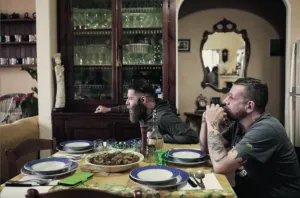
This Tuscan winter soup recipe is made with the dark, robust leaves of cavolo nero, a native Tuscan kale. We had this soup with our friend Franca Buonamici from Lucca and drank it with the neighbour’s homemade red wine. These are her boys below who still come back for lunch from work. I love the fact that the modernity in the tatoos and i-phone contrasts with the medieval soup still being served at home. The photo is by Helen Cathcart from our cookbook Tuscany by Hardie Grant.

Franca S Boys Eating Ribollita

The story is that the recipe dates back to medieval times when the wealthy would use a trencher, a thick slice of bread, to catch the meat juices as they ate. These could be eaten or tossed aside for the animals or peasant workers to collect. The meaty tasting bread would be “reboiled” with vegetables and beans to make a meal, hence the name.

Using three different cabbages is not strictly necessary but you would be surprised how their flavours differ. The white is quite sweet against the bitter kales. This is a dish that can change completely according to what vegetables you have available, what is growing in your orto or what you have in the back of the fridge (you can add the chopped leftover vegetables from a stock into the soup, too – nothing goes to waste in a Tuscan kitchen). The soup can be eaten after cooking but traditionally it is left for a day then layered with saltless spongy Tuscan bread and cooked again. It is often served with a spring onion (scallion): I find it a little overpowering, but the choice is yours!

Serves 6–8

For the soffritto

6 tablespoons extra-virgin olive oil

1 medium carrot, roughly chopped

1 large red or white onion, finely chopped

1 large celery stalk, roughly chopped

2 garlic cloves, peeled and lightly squashed

1–2 teaspoons salt

freshly ground black pepper, to taste

a large handful of parsley, finely chopped, including stalks

1 sprig of rosemary (optional)

For the soup

250 g (9 oz) potatoes, cut into 2 cm (¾ in) dice

250 g (9 oz) white cabbage, shredded (like coleslaw)

400 g (14 oz) raw cavolo nero or 200 g

 (7 oz) cooked and squeezed leaves, roughly chopped

75 g (2½ oz) curly kale, tough stalks removed and leaves roughly chopped (optional)

1 litre (34 fl oz/4¼ cups) warm chicken stock, plus 250 ml (8½ fl oz/1 cup) bean cooking water or more stock

250 g (9 oz) cooked cannellini beans

6 large slices Tuscan-style crusty bread or very good sourdough

1 garlic clove, peeled

spring onions (scallions), to serve

Cook all the soffritto ingredients for the base together for 10–15 minutes over a low heat until soft. Add the potatoes and shredded white cabbage and cook over a medium heat until the cabbage starts to wilt. If using raw cavolo nero, strip the leaves from the stalks and tear the leaves into bite-size pieces. Add the cavolo nero and kale to the dish and stir through.

Pour in the stock and bring to boil, turn the heat down to a simmer and cook for 30 minutes, or until the vegetables are cooked through. Divide the cannellini beans in half and add one half to the soup. Purée the other half with a stick blender, then add this to the soup too. Cook for a further 10 minutes or so to warm the beans through. Taste and season as necessary. Serve straight away or let the soup cool before transferring to the fridge if keeping overnight.

Preheat the oven to 180°C (350°F/Gas 4). Toast the bread until lightly crisp, then rub each slice with the garlic clove. Pour a layer of the soup into an ovenproof serving bowl, top with a few slices of bread followed by another layer of soup. Repeat until the bread and soup is used up. Put into the oven for 20–30 minutes or until the soup is piping hot and the bread has soaked up the juices. Serve warm with one spring onion per bowl and a swirl of your best extra-virgin olive oil.